-
Bloomfield, H.,
-

-
Shaffrey, L.,
-
Hillier, J.,
-
Cotterill, D.,
-
Pope, J.,
-
Kumar, D.,
-
Champion, A.

A new study explores and quantifies the impacts of co-occurring extreme wind and flood events.
Extreme wind is the main driver of natural hazard losses in North-West Europe, with flooding coming a close second. However, the two hazards are, at present, modeled separately. Research has found that both wind and flood events are often caused by extra-tropical cyclones so can co-occur, but there has been little research into the combined impacts of these events.
For the insurance industry, it is crucial to understand how wind, flood and damage are linked in order to accurately assess the exposure and potential loss in clients’ portfolios. There is also growing interest – in the insurance industry and beyond – in how climate change might affect these compound risks.
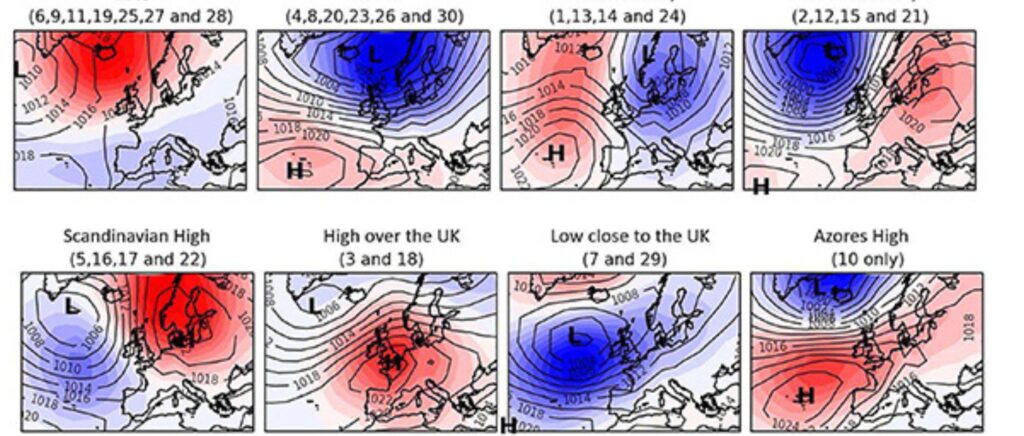
A previous paper by Bloomfield et al shows how the two hazards frequently co-occur across seasonal and daily timescales. It also finds that the frequency of extreme 1-day wind-flood events could increase four-fold in a future climate. However, the synoptic meteorological conditions associated with these events are still not well understood and, thanks to a lack of high-resolution climate projections and flood simulations, little research has been published into the effects of climate change.
In this new study, the researchers seek to fill the gaps and explore further the behavior and risks associated with compound wind-flood events – the weather patterns that drive them and their frequency and severity – in both a present and future climate.
Did you know we are building a combined wind-flood model with our partner Reask? This will give professionals unparalleled access to risk data on floods, tropical cyclones and hurricanes.
The research: Using high-resolution data to quantify impact
To understand and quantify the impact of co-occurring extreme events, researchers need access to high-resolution meteorological and climate data that can be matched with compound event indices. This study uses the Storm Severity Index (SSI) and a newly created Flood Severity Index (FSI) along with climate simulations and a UK focused flood model to:
- Quantify the large-scale drivers of one-day and seasonal co-occurring wind and flood extremes over the UK in a present climate.
- Understand how climate change might change the frequency and severity of these events.
Key findings: Shifting locations and greater risk of wind and flood
The researchers found that the synoptic conditions leading to co-occurring extreme wind and flood events change under a future climate, as does the frequency and severity of the events. Some of the key results are:
- January and February are the months when daily extreme events are most likely to co-occur.
- These events are often associated with cyclonic weather patterns, but in a future climate, extreme compound events will happen in a wider variety of weather patterns.
- With climate change, the risk of extreme compound events increases almost four-fold. Multi-day compound events are also more likely.
- The location of extreme precipitation events shifts southward towards parts of the UK where there is more exposure.
- With seasonal timescales, years tend to be either flood-prone or wind-damage-prone. In the future, however, we will see more years that will experience both extremes.
Want to dive deeper? Read the full paper in Environmental Research
Related webinar: Exploring the impact of compound events
In part three of our three-part CPD-accredited webinar series in conjunction with the Chartered Institute of Water and Environmental Management (CIWEM) we look further into compound events.
Catastrophic events often are not driven by one process. Extreme coastal floods can coincide with strong winds, or damage from extreme rainfall can be amplified when following a wildfire. However, typical catastrophe models rarely look at the probability and impact of multi-peril compound events. Learn more by watching the webinar on-demand.
Related research

Automated tail-informed threshold selection for extreme coastal sea levels
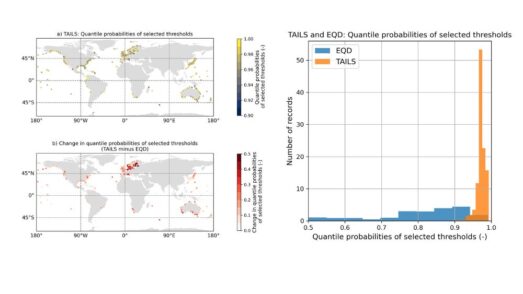
A new method, TAILS, sharpens how we identify extreme events by focusing on the most critical data, giving clearer, more reliable estimates of future coastal hazards worldwide.
Introducing BURGER, Fathom’s new extreme rainfall dataset
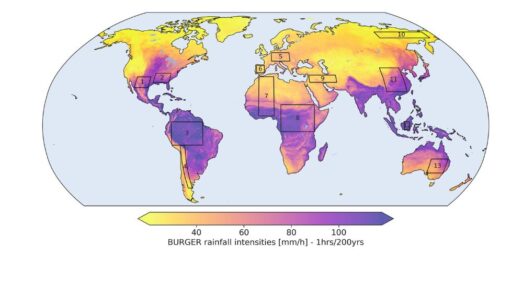
New research by Fathom’s Senior Hydrologist, Dr Jannis Hoch, and other Fathom scientists describes Fathom’s new dataset, Bottom Up Regionalised Global Extreme Rainfall, or BURGER for short. It’s the first of its kind to be created from rainfall gauge data and the first to contain extreme estimates for durations as short as an hour.
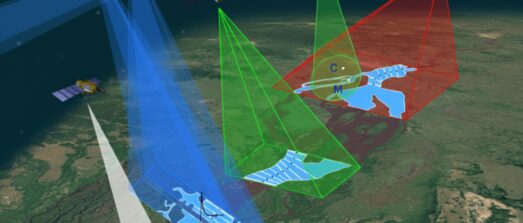
Satellite Requirements to Capture Water Propagation in Earth’s Rivers
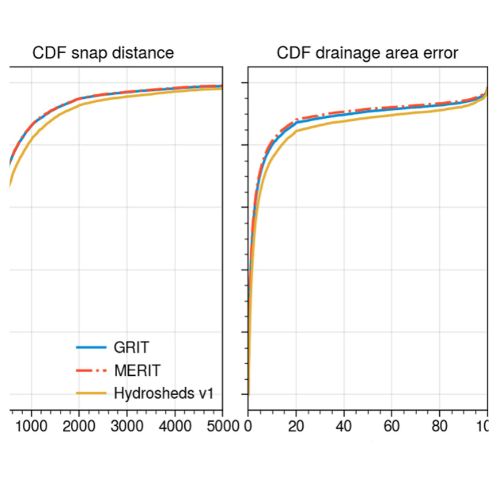
Global River Topology (GRIT): A bifurcating river hydrography
Researchers have created the first branching global river network that represents bifurcations, multi-threaded channels and canals.
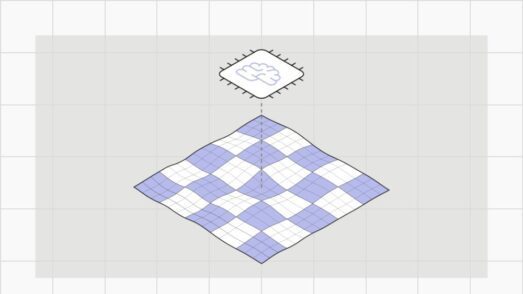
FathomDEM Global Terrain Map
A new research paper published in Environmental Research Letters outlines the creation of FathomDEM, a new global 30 m DEM produced using a novel machine-learning approach.