
A new research paper examines the role of the North Atlantic jet stream in driving co-occurring weather events. This type of multi-hazard risk is difficult to quantify for insurers, and – as this study shows – promises to worsen as our climate changes.
Multi-hazard risk – when hazard events such as storms, extreme winds, and flooding occur together – has long posed a challenge in risk assessment and insurance. The risk associated with co-occurring hazards is far harder to quantify, causing it to be critically underestimated in quantitative risk assessments. This is a significant concern given their greater impact on society than if each event were to take place separately.
Great Britain is particularly affected by wintertime flood and wind incidents, likely due to the tracking of extra-tropical cyclones (a key driver of both flooding and extreme wind in this part of Europe) eastwards via the North Atlantic jet stream. A new study uses UK Climate Projections to understand the drivers of flood-wind co-occurrence in the country. Framed by the insurance sector, it explores the underestimation of risk from these multiple hazards, more deeply examines the role of the jet stream, and analyzes how flood-wind events are experienced societally within the country.
The research
The researchers assess the meteorological drivers of joint wintertime wind and high flow extremes in Great Britain, aiming to determine:
- The extent to which the most extreme winds and flows co-occur
- How future changes in the jet stream may influence co-occurrence in future climates
- How strongly co-occurrence varies according to the time window used to group individual events into compound episodes
- How simple jet stream metrics (position, strength) could be used to identify scenarios where multi-hazard events are likely
They utilize regional simulations of pre-defined weather patterns from the UK Climate Projections (UKCP18) for a 1981–1999 baseline and projections for 2061–2079, with an assumed Representative Concentration Pathway (RCP) of 8.5 (high emissions). Using a statistical model, they quantify the co-occurrence of 3427 wind events within multi-hazard episodes, with durations ranging from daily to seasonally between October and March. They use this library of events to explore how periods of adverse weather impact society, for example through property damage, and examine the role of seasonality and jet stream metrics in how high flows and extreme wind co-occur.
The results
In the future (2061–2079), joint wind-flow extremes are twice as likely as during 1981–1999, with conditions potentially exceeding our expectations of what currently constitutes ‘high’ river flows. The researchers find that grouping single events into episodes is important for forecasting; if events are assumed to be independent rather than co-occurring, the probability of their occurrence is underestimated by a factor of 2–4. Importantly, the probability of shorter, more severe storms is more likely to be underestimated, highlighting the need to consider risk from worse and closely consecutive storms (with time gaps of three days or less).
The largest increases in co-occurring events are driven by the North Atlantic jet stream becoming stronger and squeezed into a more southerly latitude, which increasingly occurs in mid-winter (Dec-Jan-Feb); for this scenario, typical future conditions instead reflect especially extreme, high-flow conditions currently experienced in Great Britain. This connection between compounding flood-wind events and jet stream state suggests that the large-scale conditions driving extreme storms on climate timescales will vary regionally and by country – important knowledge for risk mitigation and planning across Europe, and a valuable focus for future research.
Weather-related hazards bring huge financial loss. For example, three storms occurring in February 2022 in the UK and Northwest Europe brought nearly €4 billion in insured losses in multiple sectors, while a similar triple storm threat in December 1999 caused around €10 billion of insured property damage alone across Belgium, Switzerland, Luxembourg, France, Germany and Denmark.
Read the research in full in the International Journal of Climatology.

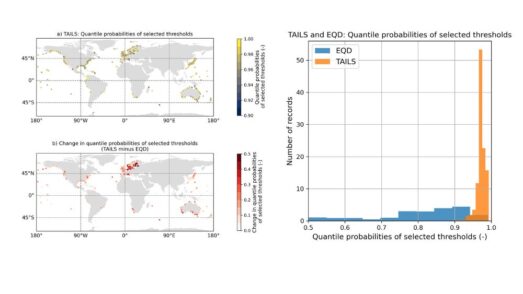
Automated tail-informed threshold selection for extreme coastal sea levels
A new method, TAILS, sharpens how we identify extreme events by focusing on the most critical data, giving clearer, more reliable estimates of future coastal hazards worldwide.
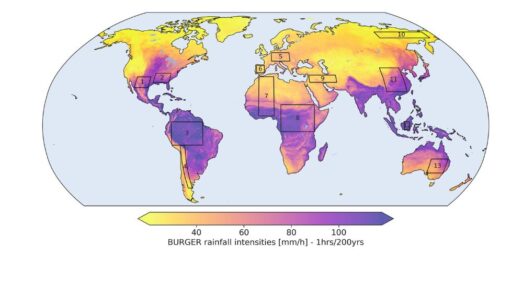
Introducing BURGER, Fathom’s new extreme rainfall dataset
New research by Fathom’s Senior Hydrologist, Dr Jannis Hoch, and other Fathom scientists describes Fathom’s new dataset, Bottom Up Regionalised Global Extreme Rainfall, or BURGER for short. It’s the first of its kind to be created from rainfall gauge data and the first to contain extreme estimates for durations as short as an hour.
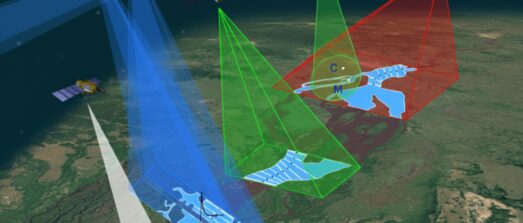
Satellite Requirements to Capture Water Propagation in Earth’s Rivers
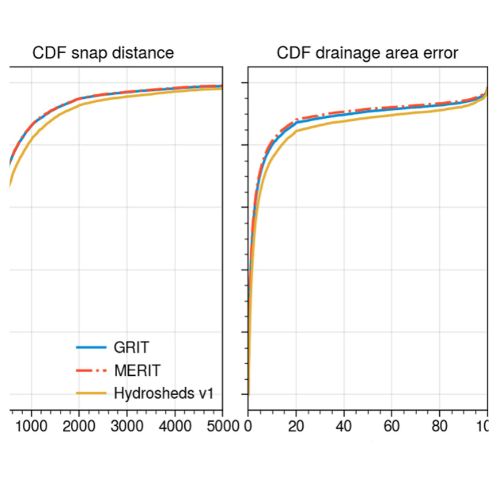
Global River Topology (GRIT): A bifurcating river hydrography
Researchers have created the first branching global river network that represents bifurcations, multi-threaded channels and canals.
FathomDEM Global Terrain Map
A new research paper published in Environmental Research Letters outlines the creation of FathomDEM, a new global 30 m DEM produced using a novel machine-learning approach.