The UK financial sector faces higher standards for flood risk data, governance and model defensibility
On December 3, 2025, the Prudential Regulation Authority (PRA) released a new Supervisory Statement (SS5/25), replacing SS3/19 set out in 2019. This will impact UK financial institutions under PRA supervision, who will now be expected to assess, manage and disclose their climate-related financial risks. The grace period is now over; the PRA has moved to active supervision. The statement explicitly highlights physical risks, such as “floods, storms and rising sea levels”, as primary transmission channels that firms must rigorously manage.
“Understanding and effectively managing climate-related risks remains challenging and continues to evolve. The PRA’s updated expectations respond to industry calls for greater clarity and consistency, supporting firms as they build their resilience against climate-related risks.” The Prudential Regulation Authority (PRA)
The impact is imminent: firms have until June 3, 2026 to conduct a comprehensive internal review of their current status against the new requirements and present a credible plan to close any identified gaps; they must now evidence that uncertainty is understood, governed, and decision-relevant, not just disclosed. This move highlights the issues with generic, low granularity flood maps and “black box” risk methodologies as well as the role of model and data uncertainty when assessing and quantifying climate risk. Firms must now critically assess the limitations and assumptions of their data.
“Data and model uncertainty is an integral part of the climate-related risks firms must manage. Firms should identify and assess any data gaps to understand the extent of uncertainty and reflect this when setting risk appetite and developing risk management tools.” – p29, PRA Supervisory Statement (SS5/25).
To understand more about how Fathom measures uncertainty, read our insight.
Who is affected and what has this got to do with flooding?
The new supervisory expectations target a broad segment of the UK financial system as well as overseas financial institutions who operate in the UK, specifically banks, building societies and insurers (including Solvency II firms and Lloyd’s managing agents).
The PRA emphasizes that physical risks like flooding (in particular repeat and compounding flooding) have unique characteristics: they are systemic, non-linear, irreversible and subject to tipping points. The regulator explicitly uses flood risk to illustrate the granularity required in risk assessment:
“For example, a mortgage lender might consider how the impact of climate change on flood risk might affect credit losses due to the cost of property damage and the associated impact on property values”. – p15 PRA Supervisory Statement (SS5/25)
Within the category of physical and climate risks, floods are among the world’s costliest and deadliest natural hazards. A third of the global population is exposed, with flood-related economic losses exceeding US$1.2 trillion in the past three decades. Every flood is unique, too, shaped by topography, land use and volatile storms.
The four challenges for managing flood risk, and how Fathom helps firms tackle them
SS5/25 regulation
Governance:
“The PRA expects the board to have a high-level understanding of the impacts of climate-related risks on the firm’s business model over various time horizons and under different climate scenarios.”
They must explicitly approve risk appetite statements that include climate-specific limits.
Fathom’s approach
Our report into how boards are approaching climate risk identified that 93% of board members see climate risk as presenting unique governance challenges. The regulation continues to put pressure on boards to understand the models they use to project risk.
Fathom’s flood risk maps and models include climate conditioning, allowing clients to view their risk under tailored scenarios using intergovernmental Panel on Climate Change (IPCC) pathways (SSPs, RCPs) or Network for Greening the Financial System (NGFS) frameworks up to 2100, selecting levels from 1°C to 5°C above pre-industrial temperature.
Risk management:
Firms must identify material risks where physical hazards transmit into financial risk. For banks, this includes assessing how insurance retreat (e.g., the withdrawal of flood insurance or government backstops like Flood Re) could amplify credit risk.
In simple terms a bank’s balance sheet is invariably tied to the physical assets that act as collateral in the event of a loss of part or all of that asset, especially if it is at risk of a repeated peril.
This risk can be threefold:
- Capital risk: The value of the property is reduced, impacting the value of the loan for the bank.
- Client risk: Increasing costs for the bank’s client could mean they can no longer service their debt, which is a long term financial risk to the bank.
- Insurance risk: If a property is deemed to be at higher risk, insurance premiums can rise, or the property will be wholly uninsurable, passing the risk onto the owner or lender.
Fathom has worked with Flood Re on flood defences in the past, and continues to work with clients to help them understand not only where flooding could happen, but also how severe it could be.
Granularity and scenario analysis
This is a major focus: The PRA explicitly states that for physical risks, firms must “assess their exposures at a sufficient level of geographic granularity to capture physical impacts such as property-level exposures to flooding that may not be adequately reflected in macro-level scenarios”. Granularity is also important in scenario-based risk exercises, where banks look at their risk across a longer time horizon.
Fathom’s flood maps and models include our Climate Dynamics framework and the choice of all plausible warming scenarios up to the year 2100.
Alongside this, Fathom’s products are built on some of the most accurate datasets in the world.
Fathom’s data is granular at up to ~10 metres in some parts of the world, and ~30 metres globally.
However, we are careful to understand the fundamental limitations of finer resolution flood models in an open and transparent way.
Data and disclosure:
Firms are expected to identify data gaps, such as a lack of high-resolution flood maps and develop plans to remedy them. Crucially, firms must “scrutinise data and projections supplied by external data suppliers” rather than using them blindly.
Firms must disclose how climate-related risks are integrated into their governance and risk management, enhancing transparency on their approach to managing material physical exposures.
Fathom’s “glass box” methodology and transparency is one of our core values, giving clients reassurance when using our data. In aid of this:
- We consistently publish the research which underpins our products.
- We quantify and are open about the uncertainty of our models, and where they are more reliable.
We have produced the most comprehensive evaluation of a global flood mapping framework ever presented, validating its Global Flood Map through extensive peer-reviewed methodology.
Why is validation so important?
Validation is when a model is benchmarked against another reputable source, and is integral to Fathom’s commitment to promoting transparency, communication and taking a critical approach.
Validation identifies biases, which is where a model is wetter or drier than real-world observations, and that helps us analyze and use the data accurately. Crucially, it helps us understand the strengths and weaknesses of our models and makes sure we are capturing any real-world changes – such as land-use or development – that might affect flood patterns.
It helps determine which model is the best fit for the purpose, whether that’s risk management, climate change adaptation or disaster preparedness. And ultimately, it gives our clients confidence that our model is robust, valid and reliable.
Fathom: Providing the high-fidelity flood risk solution
Meeting the enhanced expectations of SS5/25 by June 2026 presents a significant data challenge; the PRA’s requirement for “property-level exposures to flooding” renders broad, postcode-level data insufficient.
Fathom, a leader in water-risk intelligence, offers a solution that directly addresses these regulatory imperatives.
By leveraging Fathom’s data, financial institutions can move beyond compliance, building the “capabilities and resilience” necessary to navigate the systemic challenge of flood risk in a changing climate.
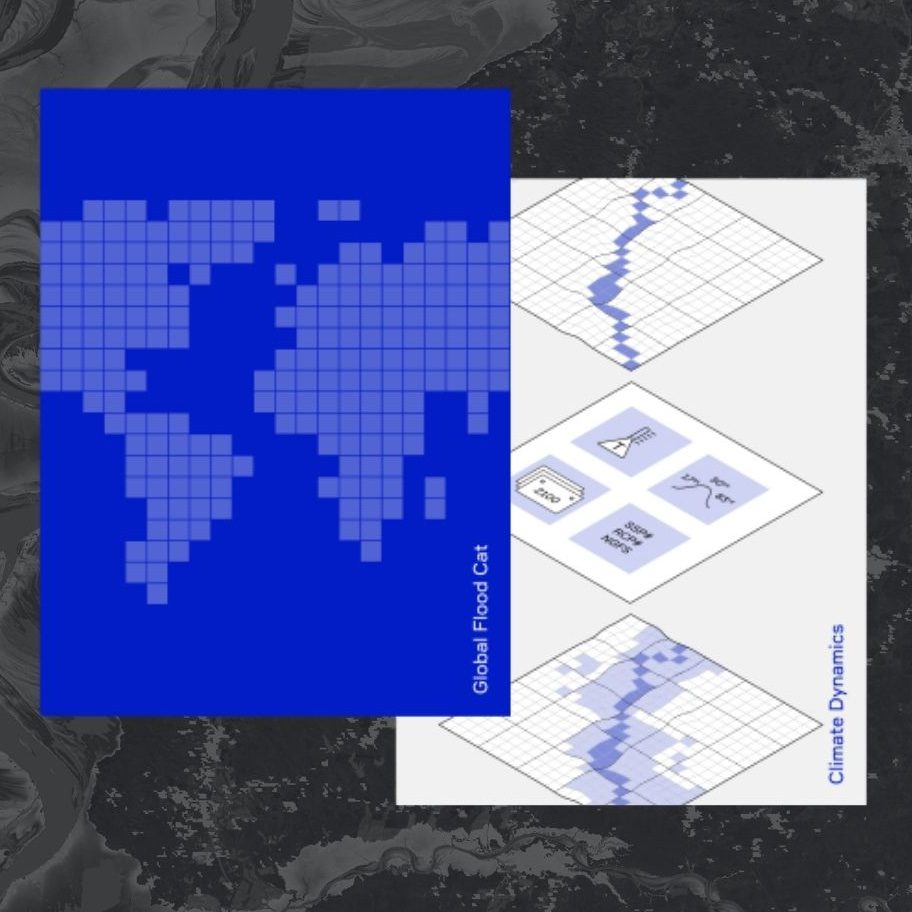
Interested in learning more about how flood catastrophe models can help you understand your risk?
Join Fathom for exclusive access to Global Flood Cat, our flood catastrophe model for large financial institutions that want to understand how exposed their asset portfolio is to flood risk.
Results can be tailored to provide insight about:
- Which assets are driving risk;
- Tail risk;
- How future climate conditions might change the risk profile.