
Financial institutions are recognizing the impacts of climate risk more than ever, but focus is shifting dramatically. Here’s what we see dominating the conversation in the year ahead.
Takeaways: How is the financial sector rethinking physical climate risk?
- Climate risk is no longer theoretical. It is here and already having a significant financial impact, causing it to rapidly climb the agenda for financial organizations
- Focus is shifting from compliance to competition. By investing in climate risk intelligence and expertise, companies within the sector can seize the opportunities that climate risk brings to stay in the game
- To remain competitive, organizations need the best data and the right expertise to assess and effectively operationalize climate risk analytics
- Climate scientists and financial institutions are increasingly working together, showing how the conversation on climate risk value has – and will continue to – evolve in the sector.
Financial sector organizations no longer view climate-related physical risk as an abstract consideration for the future; increased flooding, wildfires and hurricanes are already happening with increasing frequency. With COP30 and PRI in Person in full swing, and after Climate Week in New York City (NYCW) and the IGCC Summit in Sydney, Fathom has been hosting workshops, speaking at conferences and summits, and catching up with financial and climate risk professionals from around the world to find out how the climate risk landscape is shifting.
These events represent a perspective that is rapidly crystallizing across the financial sector. Financial markets are shifting from viewing physical climate risk as just a regulatory compliance exercise to recognizing the opportunity and value it creates.
It’s been a busy period, with our Principal Climate Scientist, Dr Natalie Lord, addressing financial and climate professionals at ICE’s 2025 Climate & Capital Conference, and connecting with banking and asset management experts at the MSCI Americas Summit. Meanwhile, our Co-Founder, Dr Andy Smith met with Al Gore and spoke to a packed room of investors about physical risk and climate models at the IGCC Summit in Sydney (pictured).
Climate risk is climbing the financial agenda
Climate risks are rising in priority. Issues such as insurance premium spikes and coverage retrenchment are becoming board-level issues, while changes in insurance affordability and availability are deemed wider business continuity risks.
Just a few short years ago, the hot topic in the financial sector was emissions and transition risk, with climate-related physical risk seen as “a 2050 thing”. Now the conversation is shifting rapidly. Climate risk is rising to the top of the agenda, with market forces and not only governmental intervention becoming the driving force behind climate action. This comes at a time when adaptation is increasingly seen as a mechanism for saving costs not only for businesses but also the wider community and economy.
“Every dollar invested in disaster resilience today could save communities up to $33 in lost future economic activity.” Allstate, the US Chamber of Commerce, and the US Chamber of Commerce Foundation, as reported in the Association of State Floodplain Managers
Climate risk used to broadly fail to show up in corporate reports or to influence the decisions that move capital, but now, many financial industry leaders suggest that climate-related considerations have influenced their buy/no-buy decision-making, and many believe physical climate risk should be viewed as a core credit risk. Additionally, in a recent study by MSCI, 82% of companies surveyed report financial or reputational benefits from investing in operational resilience, with a minority not considering any investment in resilience against extreme weather events (MSCI Corporate Resilience Survey).
“Two years ago, transition risk was a near-term thing to examine and physical risk was a 2050 thing. Today that’s the reverse; physical risk hits companies in the here and now, it’s amplifying and the models are lagging.” Richard Mattison, Head of Sustainability & Climate, MSCI
The conversation is shifting, says Fathom’s Chief Sales Officer, Karena Vaughan: “Across banks and investors, climate risk leaders are moving from analyzing exposure to understanding what that exposure is worth. There’s a real shift in how climate information is valued and used across the financial system.”
Why climate risk matters for financial market stability
Climate risk is highly complex: it can damage and devalue assets, drive up insurance costs and disrupt market stability. Risks span broad jurisdictions, and long time periods; are highly uncertain; and have effects on productivity, infrastructure, and local economies.
These impacts are already costing companies billions. The chronic and acute physical hazards associated with our changing climate (flooding, cyclones, wildfires, drought, extreme heat) are projected to cost some of the world’s largest companies US$ 1.3 trillion in losses in the coming year in asset damages and lost revenue. These losses are only predicted to worsen in the future, placing climate at center stage as a core financial risk.
Corporate resilience is about the bottom line, not just regulation and compliance
Financial organizations are incorporating physical climate risk into their operations like never before. It’s gone beyond a case of understanding or disclosing climate risk primarily for regulatory compliance or sustainability reasons; it’s now about remaining competitive, seizing opportunity, and maximizing value.
“Resilience is no longer a story of cost and compliance. It’s a story of value.” says Fathom’s Karena Vaughan.
Investment is starting to reward those prioritizing adaptation and climate readiness, with climate resilience becoming a valuable market signal rather than a regulatory exercise. Opportunity is arising in sectors that will grow as we adapt: resilient construction, water engineering, adaptive infrastructure. As stated at the MSCI Americas Summit at NYCW: “If something is good for society, it’s also good for financial returns.”
Climate risk is widely perceived in the sector as having no political affiliation; just as it affects everyone, all can now seize the opportunity to play a leading, and lucrative, role in climate adaptation. Rather than a cost, adaptation can be a source of growth, with climate intelligence poised to play a critical role in defining asset and enterprise value.
What do financial organizations need to understand climate risk?
The sector needs more robust data, stronger collaboration between climate scientists and the financial practitioners, and better in-house capability to assess and manage risk. Flood risk, for example, is well understood by the insurance industry which bore the financial brunt of Hurricane Andrew in the 1990s; but, as mentioned by Fathom’s founder at the IGCC Summit in Sydney “The market for flood risk information is now way beyond insurance”.
As physical climate risk increasingly affects the bottom line, investors, insurers, and lenders are accounting for it explicitly in their asset analysis, and turning to increasingly fine-scaled geographic data to do so. There’s a very real worry that local risks (after all, “all flooding is local,” says Fathom’s Dr Natalie Lord) could grow and cascade to become systemic.
The Financial Stability Board’s 2025 Roadmap for Addressing Financial Risks from Climate Change calls for climate data that’s more “comprehensive, reliable, granular, consistent and comparable”. This need is recognized across the financial sector. Data must be better designed for the financial systems it will be used within, better structured for context, comparable across relevant regions and asset classes, and integrated into the models that are actually used to value risk.
“Climate data is being reframed as financial infrastructure,” says Fathom’s Karena Vaughan. “When climate risk data is designed to fit into the models that run markets, it stops being theoretical and starts driving value. This is the journey we’re on: from risk to resilience, and now, from resilience to return.”
Putting a price on flood risk
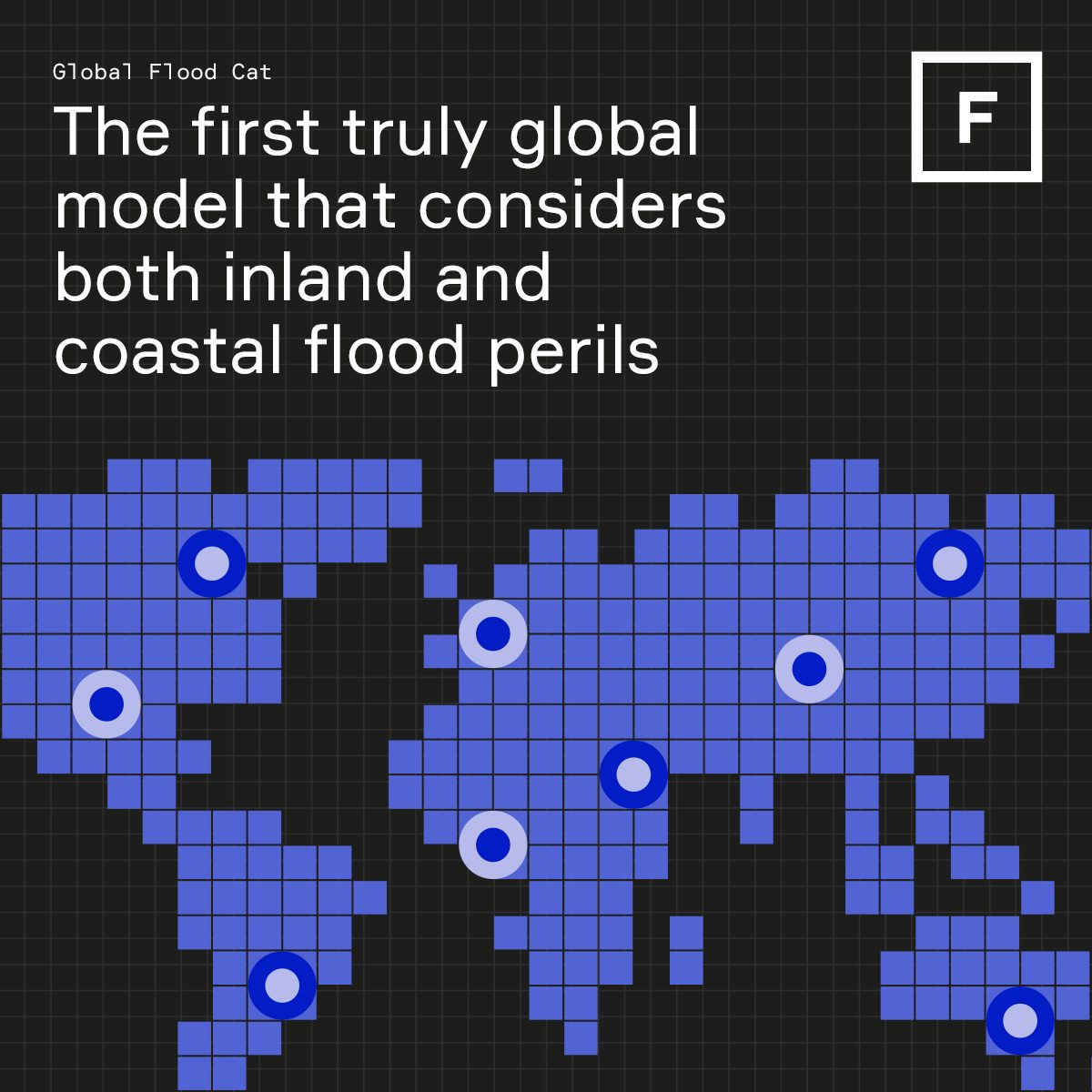
Flooding is a complex global hazard, and financial forecasting of this flooding is even more complex. Our global flood catastrophe model enables users to quantify and manage the financial risk associated with all major flood perils: essential for portfolio diversification analysis. It incorporates climate dynamics to provide a consistent, customizable view of global risk both present and future, so that those working in finance, insurance and corporate can model financial losses across their portfolios and analyze the drivers of risk accumulation.